At Phantom Gamelabs, we’ve been obsessed with the “art of start” and figuring out how to get to fun as fast as possible when the game is barely more than a structure. It’s about learning how to meet changing player needs early.

I’ll be chatting about this on this Tuesday at PGC London 2026.
Phantom Gamelabs builds co-op ARPGs on mobile, and that’s the lens I bring to this discussion. I come from a PM and analytics background, so I’m naturally very KPI-driven when it comes to validation. But early on, KPIs alone are often the wrong answer. So what is the right approach? After discussing this with many teams and at multiple events, here’s how I see the “art of start.”
Context first
When planning the alpha stages within soft launch, platform matters. Genre matters. Team size matters and so does your validation preferences. That’s the context. If your team is design-led and intuition-driven, don’t force heavy metrics or PTC type of tools into the mix. If your team is tiny, scale (down) the scope to match. Validation should fit the team, not fight it. It’s a phased process: first you validate engagement, and once that looks right, you move into next phases of the soft launch process to get a full read on both engagement and monetization.Speed is king-er than ever
Whatever your validation method, you need to learn fast whether the core idea and setup work. For a team of seven, that usually translates to a few months of work. The longer you wait, the harder it becomes to understand what’s actually broken, as layers of features, content, polish, and detail pile on and start to blur player focus and muddy your results.In the past, developers were often limited to English-speaking geos. With AI localization, even small studios can now realistically test early on in non-English-speaking markets without heavy overhead. That’s also a way to reach results faster and on mobile, Android is the platform for that.
Volume narrows the confidence interval
Scope and confidence are key. You need enough signals to trust what you’re seeing and enough confidence to interpret it without being misled by the numbers. In qualitative studies, that means focusing on longitudinal feedback, not just one-off sessions. In quantitative analysis, it means having daily install cohorts large enough to draw real conclusions, guided first by just one or two KPIs to show the way. The key here is planning your testing rounds: moving from proving clarity and core appeal of the game to validating deeper engagement and monetization.Different Alpha stages need different KPIs
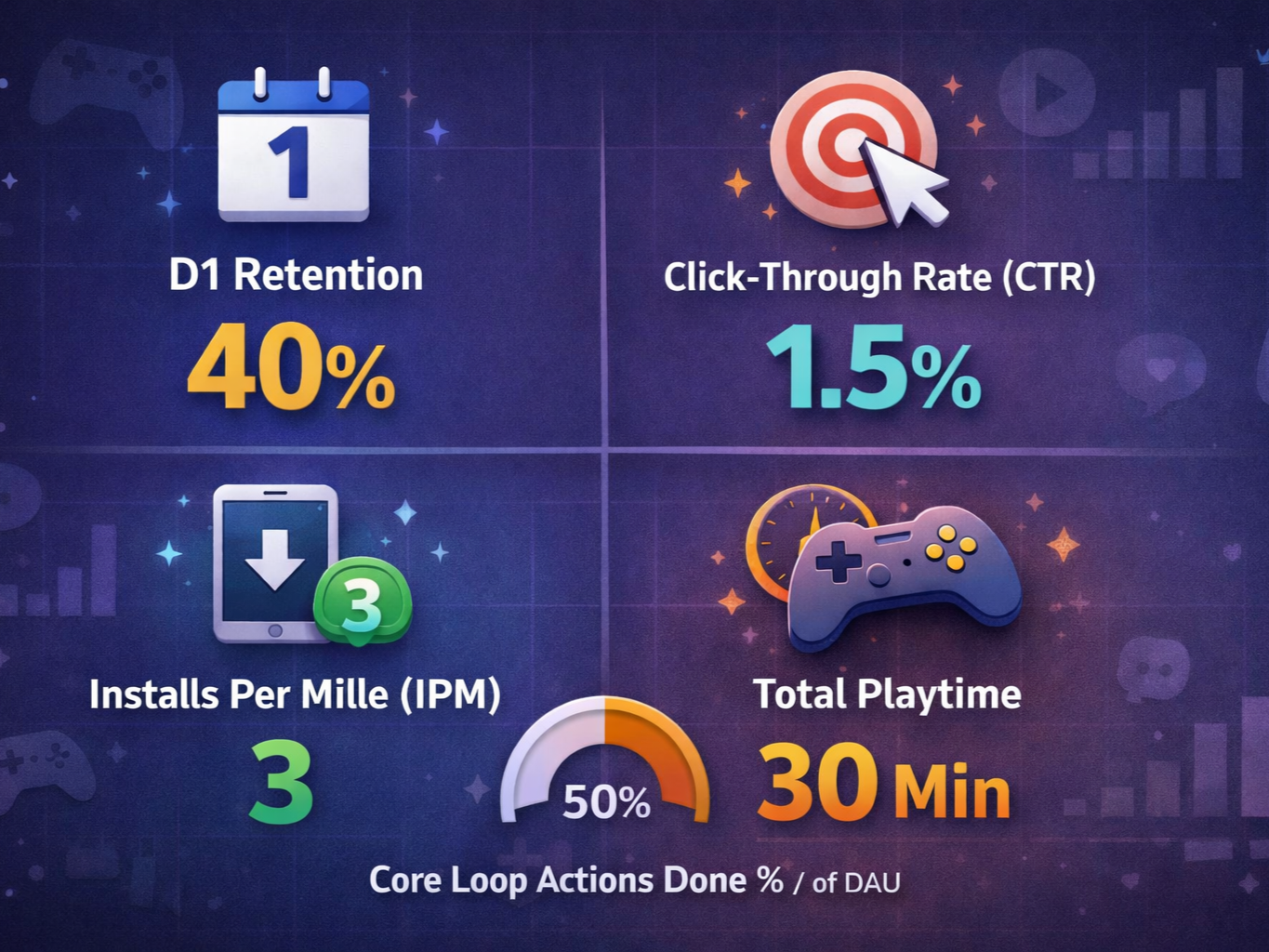
Soft launch should be thought of as a series of different alpha stages. For us, with a few days of gameplay, we can focus on early moments like how players get into the game, how long do they stay and what brings them back the same day or the next? Is there clarity and early appeal. Once that looks promising, we shift to stacks and key loops or modes before getting a read of the big picture, with monetisation. Even small studios can leverage AI-generated playables and video ads from their very first tests.Multi-method beats single-method
You can’t fully answer “is it fun?” with metrics alone and you can’t answer it with PTC alone either. That’s why we combine methods. Surveys help confirm direction and hint at the “why.” Data confirms direction too and, just as importantly, it confirms scale.In the end, it’s about building fun, and fun is a feeling. By being clear about our hypotheses and chosen methods, we get to reliable answers faster.