Lately, I’ve been spending time with some fab people at Nordic Game, TimeOut, Games First, and Way Forward Forum. So much energy, parties & fun and so many genuinely inspiring conversations!
Those discussions sharpened my views on the future of the midcore gaming market. The landscape of 2025 looks nothing like the one that peaked around 2018, and the next three years are reshaping it even further. Here's my take on where the midcore market is heading.
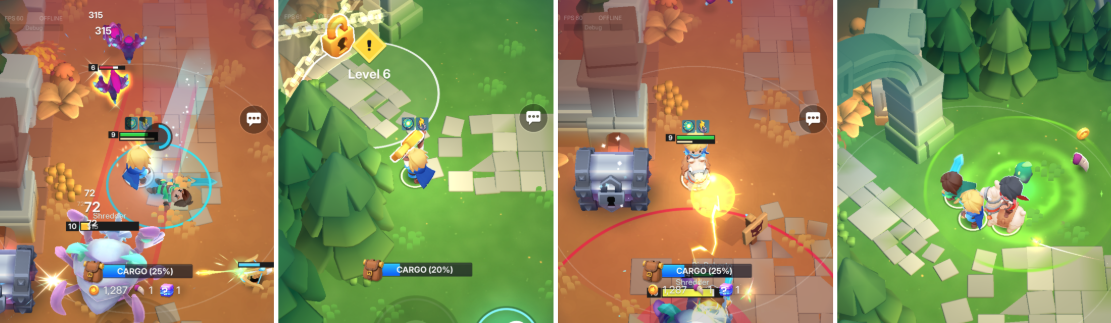
Audience: The 10-year-olds of 2010 are adults today. As a result, our audience now comes with vastly different gaming backgrounds and expectations. We need to serve players whether they grew up with Roblox, Clash of Clans, Diablo or Ultima Online. For a mobile game to reach a sufficiently broad audience, it needs to resonate broadly, both amongst 18, 23, and 44 years olds. Also, maximizing gender diversity should still be an important objective, even if it is a hard task in midcore.
Product: We have to be either on the casual (AFK Journey) end of the spectrum or on the AAA (Genshin Impact) end. Over the past decade, the middle ground has been captured by Clash of Clans, RAID: Shadow Legends, Rise of Kingdoms, and Last War. It is about competing against massive live-service platforms generating hundreds of millions in annual revenue.
That’s why, the middle ground is increasingly a no-go zone. Going forward, and to survive, we have to solve a specific problem better than anyone else: retention mechanics, community structures, proprietary IP with genuine audience attachment, a clever genre position or something like that. And avoid the mid of midcore.
UA: The studios winning today have stopped treating UA as the primary growth lever or trying to get lucky on Tiktok. Instead, they focus on product quality and retention as the real moat. Going forward, D7 is the most important Dx for us for measuring early stickiness, while also minimizing churn between D30 and D60 to drive growth.
AI: Looking at it now, the first wave of AI hype in gaming was mostly noise: procedural dungeon generation, NPC dialogue trees, and such. The current wave of workflows and pipelines is much more interesting. Like many studios, we now routinely use generative AI to accelerate concept art iteration, support agentic coding, eliminate localization bottlenecks, and build dynamic design solutions that would have required significantly larger teams just a few years ago.
In a nutshell, we keep experimenting and advancing on multiple fronts at the same time to succeed and grow. The real payoff is faster product development, more experimentation, and a greater ability to find and explore new niches.